


Dec 9, 2020Broker Tips
Regulation for FX/CFD Brokers - Part 2
Part 2: Offshore Jurisdictions
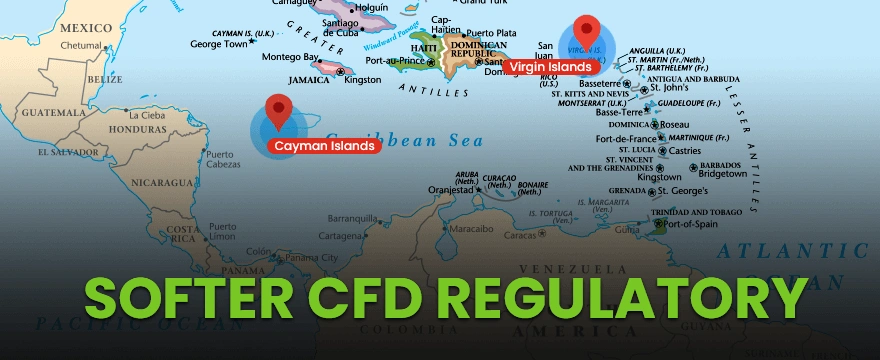
In Part 1 of our regulation primer for brokerages, we focused on Europe, the United Kingdom and Australia. These jurisdictions offer reasonably strict regulatory regimes that have come to be harmonised in recent years in order to avoid the possibility of arbitrage. In this article, well be looking at some of the softer regulatory jurisdictions that are often favoured by new brokers who want to move fast and break things. These include the Bahamas, Belize, the British Virgin Islands, the Cayman Islands, Labuan, the Seychelles, and Vanuatu.
Costs, Taxation and Lead Time
As youll see in the table below, theres a greater degree of variability between these jurisdictions. Your choice of which of the following to be licensed in wont be dictated as much by your target market, but will have more to do with the costs associated with setting up your business. All of them offer quite timely licensing procedures and are either tax free or offer far lower corporate tax rates than any of the big 3.
However, the regulators in the table below vary quite significantly in their capitalisation requirements, and in whether or not they require a physical presence. Regardless of whether you are required to keep a physical office, you will often be required to employ local compliance officers and auditors. These are factors that will have to be carefully weighed before making a decision.
| Country | Regulatory Body* | Capitalisation Requirements* | Corporate Tax Rate | Physical Presence | Lead Time | Fees* |
| Bahamas | Securities Commission of the Bahamas (SCB) | 300k (USD) | 0% | Required | 2-4 Months | 7700 (USD) |
| Belize | International Financial Services Commission (IFSC) | 25k500k (USD) | 1.75% | Required | 2.5-3 Months | 6000-26,000 (USD) |
| British Virgin Islands | BVI Financial Services Commission (BVIFSC) | 50k1m (USD) | 0% | Required | 3-4 Months | 2500 (USD) |
| Cayman Islands | Cayman Islands Monetary Authority (CIMA) | 125k (USD) | 0% | Not Required | 6-8 Months | 12,732 (USD) |
| Labuan | International Business and Financial Centre, Malaysia (IBFC) | 300k (MYR) | 3% | Not Required | 3-4 Months | 350 (USD) |
| Seychelles | Financial Services Authority (FSA) | 25k-50k (USD) | 1.5% | Required | 4.5-5 Months | 5250-5750 (USD) |
| Vanuatu | Vanuatu Financial Services Commission (VFSC) | 50k (USD) | 0% | Not Required | 2-4 | 7100 (USD) |
*In the case of the Seychelles, these sums vary depending on whether the business in question is registering for an advisory or a full securities dealing license. In Belize there are three tiers of license, from asset management, to brokerage, to securities dealing.
Softer Regulation for Startups
A trend we have observed as a technology provider to both start-ups and established brands, is that often newcomers to the space find it more cost effective to get licensed in a softer jurisdiction to start with. This allows them to rapidly grow their client base, use more innovative marketing practices, and generally develop their brand without having such stringent oversight to hamper them in their earliest stages of development. Once this has been achieved, the next step for many brokerages will be to attempt to position themselves alongside the more established brands by gaining regulation in one or more of the stricter jurisdictions.
Looser Jurisdictions:
The Pros
The above regulators certainly offer benefits in terms of lower capitalisation needs, easier reporting requirements, and tax breaks. However, the main reason that many brokers opt to be regulated in softer jurisdictions, is that the practices that would allow them to compete with larger, more established brokerages, are still permitted in the above jurisdictions.
As the online FX/CFD industry has matured, certain marketing practices such as the offering of bonuses and high leverage ratios have come to be outlawed by the regulators we reviewed in Part 1. This means that brokerages who can offer bonuses to their prospective clients (whether monetary or otherwise) and leverage ratios in excess of 1:30 (often up to 1:500) have a significant competitive advantage over more tightly regulated brokerages.
Say what you will about the risks of high leverage and the reputability of gambling style bonuses, the market itself decides what traders really want. Many of your potential clients are in fact searching for the kinds of leverage ratios and other enticements that have been outlawed in the UK, EU and Australia. Until global regulators all settle on one set of standards and directives, there will always be the possibility of regulatory arbitrage. In such an environment, offshore destinations will continue to compete to attract financial services firms.
The Cons
As far as the cons are concerned, there are certain markets in which you may find it hard to sell your services without being licensed by the national regulator. The United Kingdom is a one such market, which is partly why CPA costs for UK clients are higher than in other markets. The public there is far more likely to entrust their money with a nationally regulated brokerage than one hailing from an offshore jurisdiction.
Another weakness of starting out in a softer jurisdiction is that it can be harder to transition to a stricter one when your entire business model has been based around the looser oversight of an offshore regulator.
Finally, a consistent pain point for brokerages regulated in offshore jurisdictions, is that these businesses will inevitably find it much harder to obtain banking and PSP relationships than those licensed in the stricter jurisdictions.
How PandaTS Can Help
At Panda, we have a long history of working with start-ups to set up their brokerage technologies, as well as helping them to gain licensing and banking relationships in the jurisdictions most appropriate to their businesses. For further information on any of the topics covered in this two-part article, dont hesitate to get in touch. One of our experienced success managers will be happy to help you.